


Samaria vs Imbros: Which Cretan Gorge Is Right for You?
Context: Crete is an island of contrasts — jagged mountains, golden beaches and whitewashed villages. In the southwest, two famous gorges draw hikers, families and photographers every season: Samaria Gorge (Samaria Gorge / Φαράγγι της Σαμαριάς) and Imbros Gorge (Imbros Gorge / Φαράγγι Ίμπρου). If you’re planning a day in the Mount Ida (Psiloritis) and White Mountains (Lefka Ori) area, choosing between these two routes matters: distance, difficulty, duration, logistics, scenery and authenticity all differ significantly.
This comparative guide is practical and objective: immersive descriptions of each gorge, exact start and end addresses, typical transport times, local tips, rough cost estimates in euros, gear recommendations, and a clear verdict based on traveler profiles (experienced hikers, families, photographers, time-pressed visitors, people with reduced mobility). I base this on official routes, seasonal bus and ferry services, and on-the-ground reports from many visitors.
Before we dive in, a few general notes: both gorges are in the Chania regional unit in western Crete; bus and ferry timetables change with the season (high season: May–October), so check schedules the day before with local operators (KTEL Chania for buses, maritime companies for ferries from Agia Roumeli). Summer heat can make hikes tough: hydrate, start early and bring sun protection. Trail signage is generally adequate for both gorges, but paths can be rocky and slippery after rain.
1) Samaria Gorge — the epic experience (description, address, route, times)
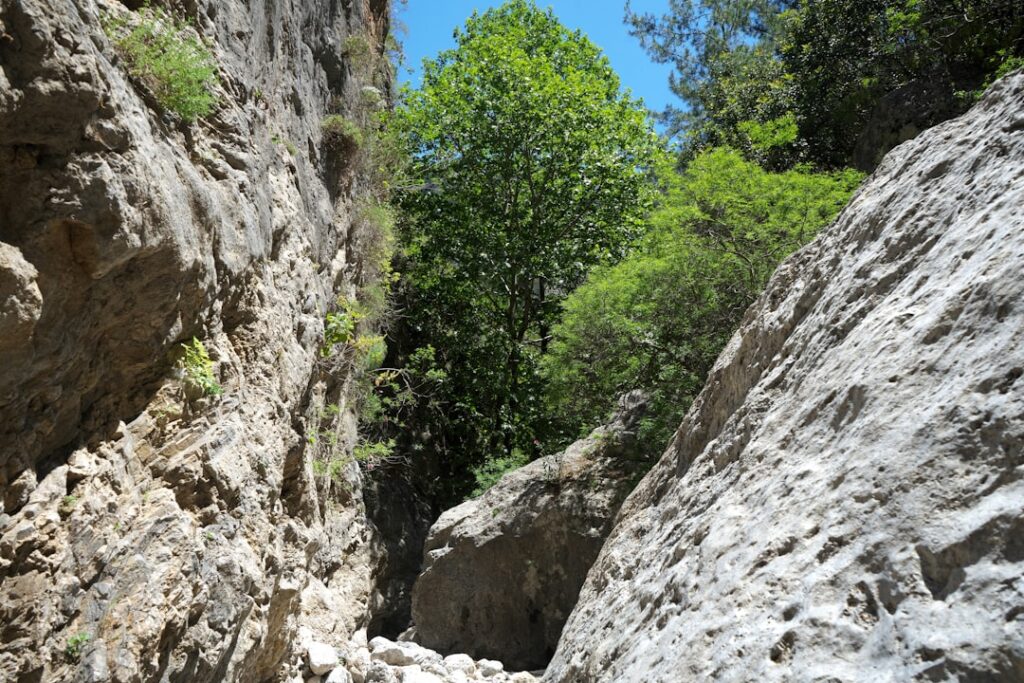
Samaria Gorge is the most famous and longest gorge in Europe. It’s part of Samaria National Park and stretches for about 16 kilometres from Xyloskalo (the Omalos plateau) down to the small coastal village of Agia Roumeli on Crete’s south coast. Main access address: Xyloskalo, Omalos Plateau, 730 08 Chania, Greece. Finish address (sea exit): Agia Roumeli, 730 14 Chania, Greece.
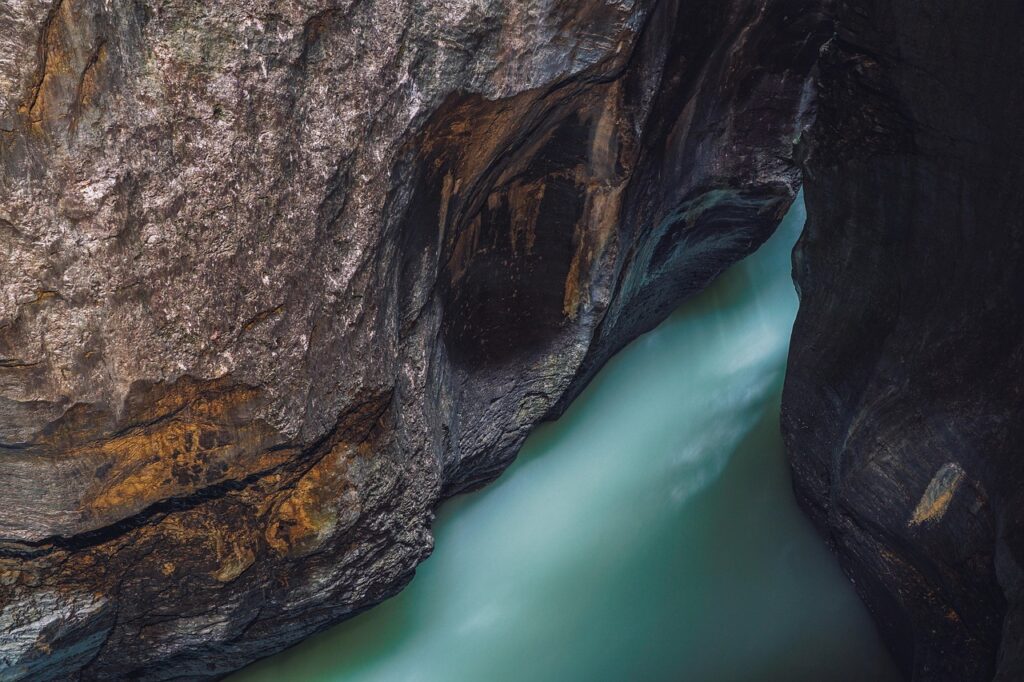
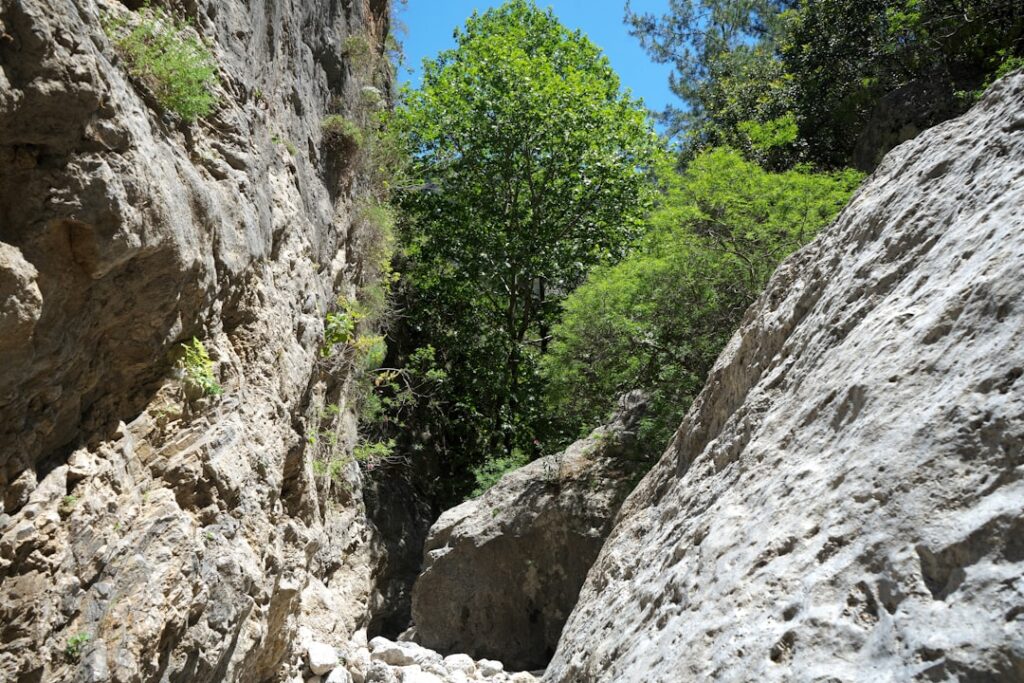
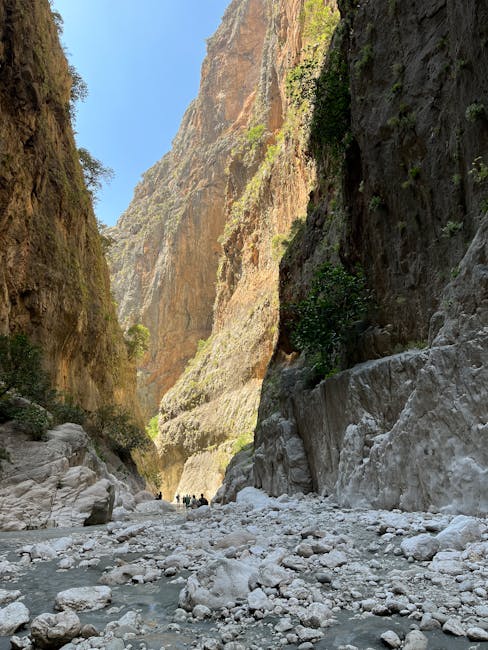
Classic route: the official trail starts at a spot called Xyloskalo (altitude ≈ 1,200 m) on the Omalos plateau; the descent passes a series of ravines, chestnut forests and narrow sections — the most famous stretch is the “Iron Gates,” a roughly 300-metre-long narrow corridor where the cliffs drop almost vertically and the walls close to about 3 metres apart. The hike finishes on the Libyan Sea shore at Agia Roumeli, where most walkers take a ferry to Sougia, Hora Sfakion or Paleochora depending on the season.
Times and logistics: the park is generally open from early May to late October (dates can vary with weather and park management). Samaria National Park charges an entrance fee; the official rate is displayed at the ticket office (expect around €5 per adult as a guide). KTEL buses leave the Chania bus station (Chania Bus Station, Plateia Vrahon 731 00 Chania) early in the morning (typical departures: between 06:30 and 07:30 in high season) to reach Omalos/Xyloskalo; Chania → Omalos takes about 1h15 to 1h30 depending on stops. Bus fare Chania → Omalos: around €6–10 one way (season-dependent). Ferry tickets Agia Roumeli → Sougia or Agia Roumeli → Hora Sfakion/Paleochora typically cost between €5 and €15 (destination and season dependent).
Duration and difficulty: the full hike usually takes 4–7 hours depending on pace (a steady descent with breaks). Distance: ≈ 16 km. Elevation change: about −1,200 m. Difficulty: moderate to hard — watch out for long, sometimes slippery sections; you need decent fitness and solid hiking shoes. Park facilities include a ticket kiosk at the entrance, signage and a few water points (in season), but don’t rely on constant comforts.
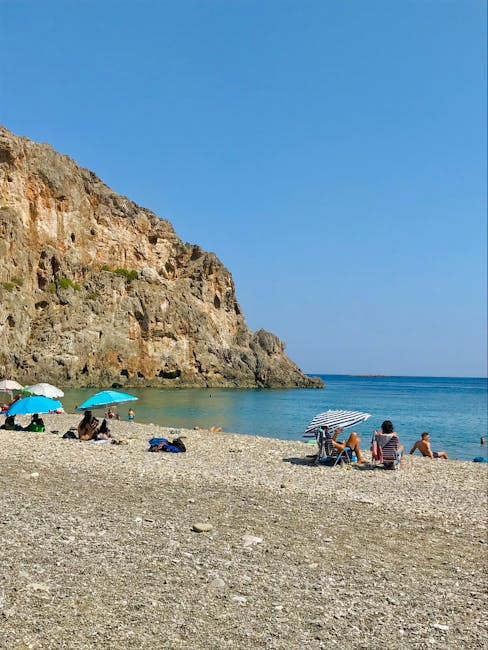
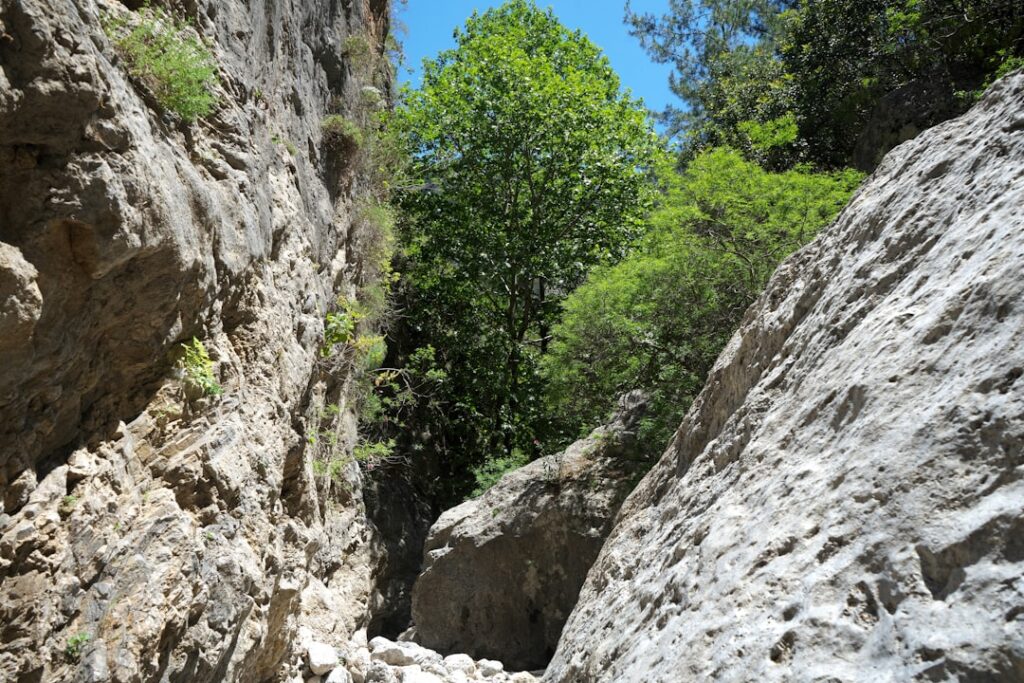
Atmosphere and scenery: Samaria impresses with scale. You cross a high plateau, a chestnut-wooded gorge, open up to sweeping views of the Lefka Ori peaks, and finally enter the narrow corridor of the “Iron Gates” where ochre rock and shafts of light create dramatic scenes. The local wildlife includes the wild kri-kri goats (Capra aegagrus cretica), sometimes visible on the cliffs. Finishing on Agia Roumeli’s pebbly beach with clear waters is a refreshing reward after a long descent.
 Click here to book your full-day Samaria Gorge tour
Practical tips for Samaria
- Start early: take an early bus from Chania (or a private transfer) to beat the crowds and the heat.
- Tickets: buy bus tickets at the Chania bus station; for the ferry, check schedules and book in high season.
- Gear: sturdy hiking shoes with good soles, at least 2 litres of water, a hat, and trekking poles if needed.
- Services: a few kiosks in Agia Roumeli for drinks and snacks; not much shade on the final stretches.
- Safety: the park can close in rain or unsafe conditions — check the kiosk at Omalos.
2) Imbros Gorge — accessible, picturesque and family-friendly (description, address, route, times)
Imbros Gorge is a popular alternative, shorter and more accessible than Samaria. It sits between the village of Imbros and the national road that connects Chora Sfakion to Hora Sfakion. Start address: Imbros Village (Village of Imbros), Imbros, 730 14 Sfakia, Chania, Greece. Finish address: Exo Imbros / village outskirts near the Hania–Sfakia road, accessible via a local parking area.
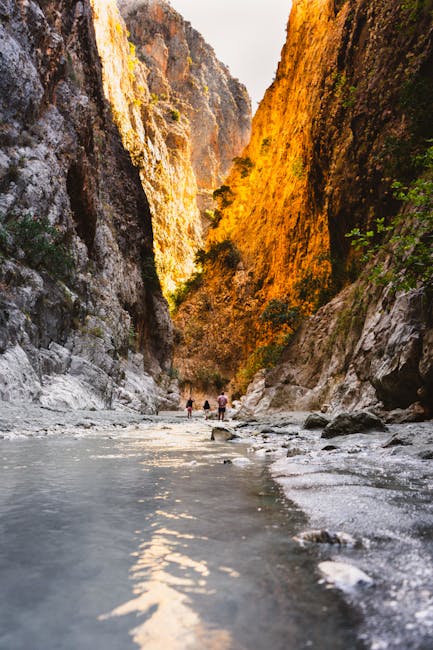
Classic route: Imbros hike covers about 8 km (varies with exact start/end points). The trail begins near the village of Imbros (east of the village there’s parking and information boards) and descends a dried riverbed punctuated by rocky passages, small cliffs and terraced olive groves. The walk usually takes 2–3 hours depending on pace. The finish is near the main road (Hania–Sfakia), where it’s easy to catch a bus or a car back.
Times and logistics: access is free — there’s no entrance fee. KTEL buses serve Imbros from the Chania bus station and from other coastal towns depending on the season. A typical Chania → Imbros bus takes about 1h15–1h45; approximate fare: €6–10 one way. You can also arrange a private transfer from Chania, Paleochora or Chora Sfakion. Imbros is usually passable year-round but the riverbed can be slippery after rain.
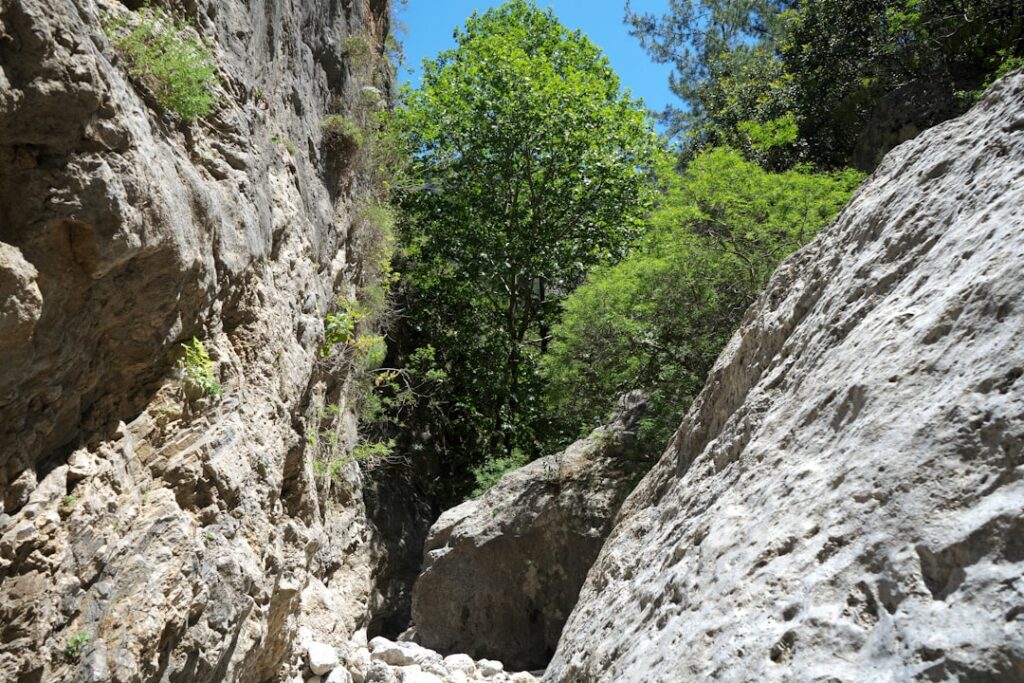
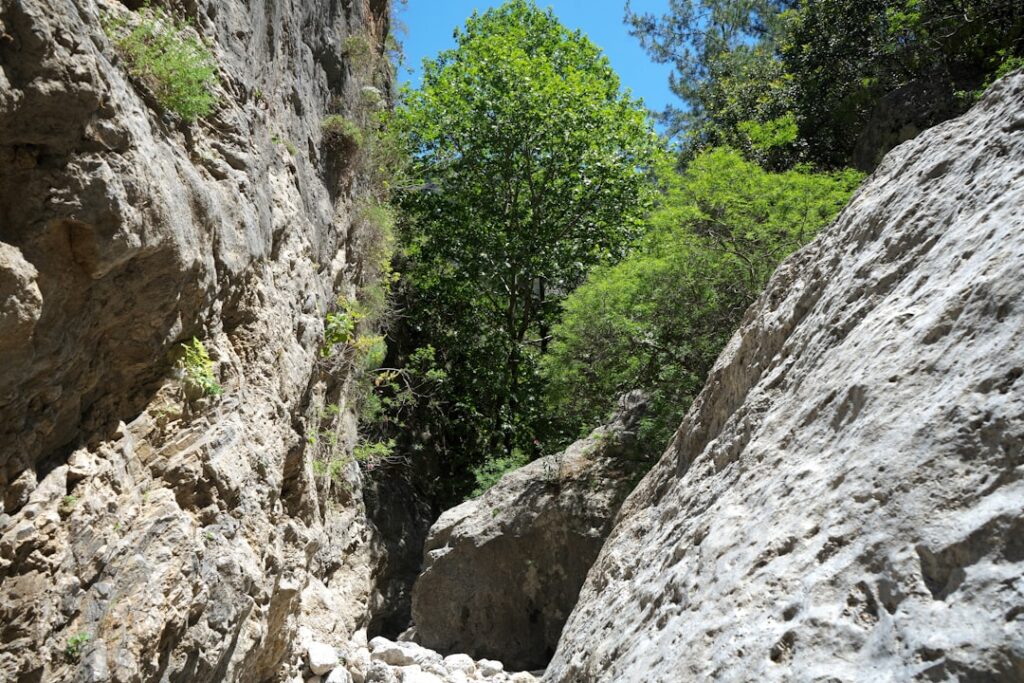
Duration and difficulty: about 2–3 hours, distance ≈ 7–8 km, moderate elevation change. The trail is well marked and features easier sections than Samaria; it’s suitable for average hikers, older children and families used to walking. The gorge has narrow rock corridors but nothing as vertiginous as Samaria, and there are shaded sections under boulders and pine trees.
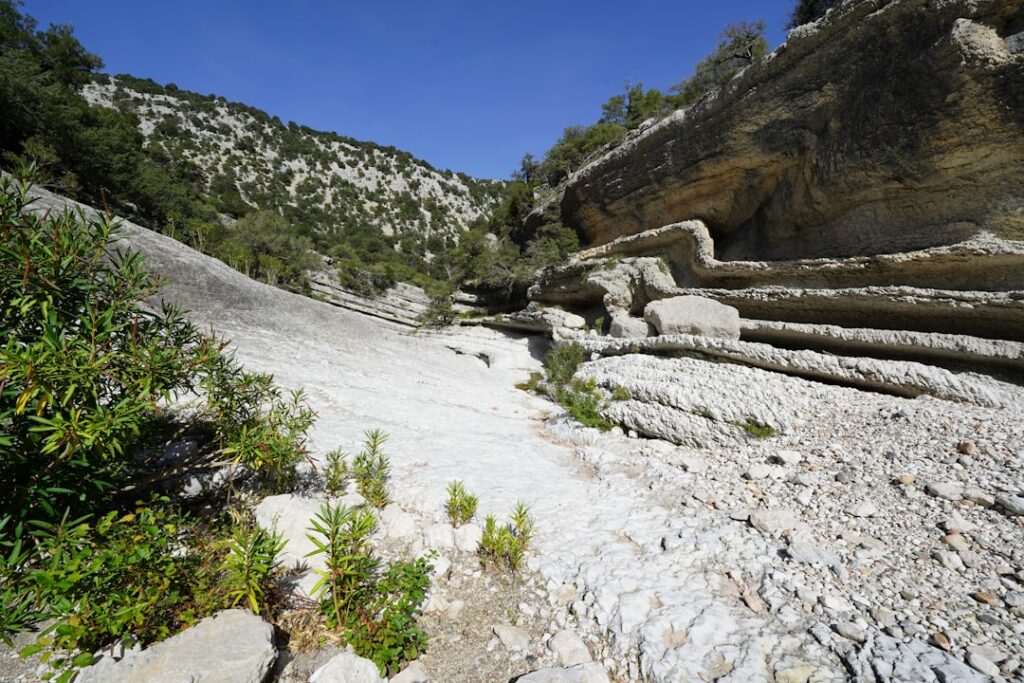
Atmosphere and scenery: Imbros offers a more intimate, « authentic » slice of rural Crete. You pass terraced olive groves, dry stone walls and limestone cliffs sculpted by time. Sea views to the south appear at times, and the final approach to the main road highlights the simplicity of the Sfakia villages. It’s a great compromise for anyone wanting a scenic hike without the physical and logistical commitment of Samaria.
Practical tips for Imbros
- Easy access: parking at the trailhead, clear signage, no ticket booth.
- Timing: ideal for a half-day if based in Chania or travelling toward the south coast.
- Gear: good shoes (not flip-flops), water, snacks; poles helpful but not essential.
- Services: a café/mini-market in Imbros village; not many services along the gorge.
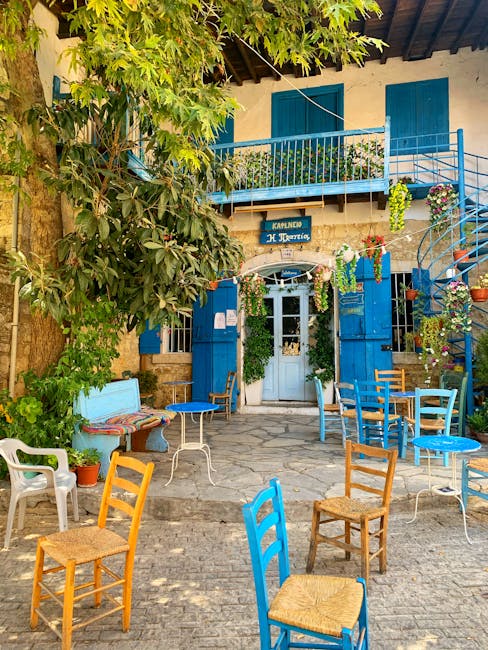
- Local tip: combine the hike with a visit to Imbros village (small tavernas) or a nearby beach for a more relaxed day.
3) Quick comparison table
| Criterion | Option A | Option B |
|---|---|---|
| Price | €30 | €12 |
| Duration | 4–7 hours (≈16 km) | 2–3 hours (≈7–8 km) |
| Comfort | Medium (long descent, little shade, ferry/transport required) | High (shorter, car/bus access, more flexibility) |
| Practicality | Complex (early bus + ferry, timetables to coordinate) | Very practical (parking, simple bus, no ferries) |
Note on the figures shown: Euro amounts are representative estimates: for Samaria, the typical total includes the park entry (~€5), transport from Chania (~€8–12), and the ferry (~€5–15); for Imbros, the main cost is bus or shared transfer (~€6–10). Prices vary with season and provider.
4) Detailed comparison by criteria
Price: Imbros is generally far cheaper. For Samaria, expect a total of €25–40 per person if using official services (bus + entry + ferry). For Imbros, you can manage with €6–15 if you take the bus from Chania or a small transfer. If you drive, costs level out somewhat: fuel + parking versus bus/ferry fares.
Duration: Samaria is a full-day outing that starts early and can end late (arrival by ferry and return by bus or taxi depending on destination). Count on 6–10 hours door-to-door depending on transfers. Imbros is clearly shorter and more flexible: a half-day is possible, or a full relaxed day if you add food and a swim.
Comfort: Samaria requires significant physical effort and intermediate logistics (park ticket, sometimes crowded ferries). Infrastructure is adequate but limited. Imbros offers better comfort for the average visitor (more control over timings, finish close to the road, no ferry waits). For families with young children, Imbros is usually the more comfortable option.
Practicality: if you have little time (less than a full day), choose Imbros. Samaria needs more coordination and can be frustrating if you miss a bus or ferry. Also, Samaria may close in adverse weather — Imbros is often passable more frequently.
5) Local advice and safety — how to prepare your day
Practical tips that apply to both gorges, with some differences:
- Check KTEL timetables: Chania bus station (KTEL Chania Bus Station, Plateia Vrahon, 731 00 Chania) is the departure point for most buses. Timetables change off-season; check the KTEL Chania website or the local desk the day before. Tickets can be bought at the counter or sometimes online.
- Ferries for Samaria: in high season there are multiple daily connections from Agia Roumeli to Sougia, Hora Sfakion or Paleochora. Check the local maritime operators and buy your ticket early if you want a specific departure time.
- Weather: avoid the hottest parts of the day (July–August at midday) for Samaria — set off at dawn. In storms or heavy rain trails become dangerous — the park may close access.
- Gear: closed, grippy shoes, breathable clothes, hat, sunglasses, sunscreen, 2–3 litres of water for Samaria, 1–2 litres for Imbros; energy snacks. A small first-aid kit is recommended.
- Respect the environment: pack out your rubbish, don’t pick plants and don’t feed wildlife (kri-kri). Preserving the landscape is essential — Samaria is a national reserve.
6) Verdict by traveler profile
Here’s a pragmatic verdict, profile by profile, based on comfort, duration, accessibility and scenic value.
- Experienced hiker / wilderness lover: Samaria wins hands down. If you have several days in Crete and are fit, Samaria offers an unmatched experience in terms of scale, intensity and landscape variety. Expect a demanding but hugely rewarding day. Verdict: Samaria.
- Landscape photographer: it depends on the style you’re after. For dramatic shots of narrow cliffs and the Iron Gates, Samaria is unmissable (morning–midday light slicing through the gorge). For intimate compositions, rock textures and traditional village scenes, Imbros gives excellent opportunities and the flexibility to return quickly if needed. If you must pick one, Samaria for the spectacle, Imbros for variety and flexibility. Verdict: Samaria (for dramatic), Imbros (for flexibility).
- Family with kids (under 12): Imbros is generally better: shorter, less elevation, finish near a road and more fallback options. Samaria is very long and can be tough on children unless they are seasoned walkers. Verdict: Imbros.
- Time-pressed traveller / limited day: Imbros. If you’re short on time you can do Imbros and be back in Chania by the afternoon without relying on a ferry. Verdict: Imbros.
- Older visitors or those with reduced mobility: neither gorge is ideal for serious mobility issues; however, Imbros is usually more accessible (still rocky). For very limited mobility, consider coastal activities instead. Verdict: Imbros (with caveats).
- Driver with rental car: having a car loosens logistics: you can park near the Imbros trailhead or arrange a transfer for Samaria. Samaria remains more time-consuming. Verdict: depends on your energy — Samaria for the unique experience, Imbros for ease.
7) Sample itineraries and practical budgets (concrete examples)
Two sample itineraries — one for each gorge — with approximate times and costs to help you plan.
Typical itinerary for Samaria (full day)
- 05:45 – Depart by KTEL bus from Chania bus station (Plateia Vrahon, 731 00).
- 07:15 – Arrive at Xyloskalo, pay the Samaria National Park entrance fee (~€5) and start hiking.
- 07:30–12:30 – Descend at a steady pace, stopping for photos and water.
- 12:30–14:00 – Arrive at Agia Roumeli, swim and have lunch (local tavernas; dish ≈ €8–15).
- 14:30 – Take the ferry Agia Roumeli → Hora Sfakion or Sougia (price variable €5–15).
- 16:00–18:00 – Bus from Hora Sfakion → Chania or taxi connection.
- Approximate budget per person: bus out (~€8–12) + park entry (~€5) + ferry (~€5–15) + meal (~€10–15) = €28–47.
Typical itinerary for Imbros (half-day)
- 08:30 – Depart by KTEL bus from Chania to Imbros (arrive ≈ 10:00).
- 10:00 – Start the hike from Imbros village; bring water and snacks.
- 10:00–13:00 – Leisurely walk (2–3 h); stops for photos and a small picnic.
- 13:00 – Finish near the main road; return by bus to Chania / transfer to your hotel.
- Approximate budget per person: return bus (~€12–20) + meal if desired (~€8–12) = €20–32.
These examples are indicative and you should double-check KTEL timetables (KTEL Chania) and local maritime companies the day before. In high season, allow extra time to avoid missing boats or connections.
Conclusion
Choosing between Samaria Gorge and Imbros Gorge mostly comes down to priorities: intensity and grandeur versus accessibility and convenience. Samaria is Crete’s “must-do” for seasoned hikers who want to cross the island’s longest gorge and reach the Libyan Sea after passing through the Iron Gates — it’s for those seeking spectacle, willing to spend a full day, coordinate buses and ferries, and tackle a demanding hike. Imbros, by contrast, is a balanced alternative: shorter, less technical, often less crowded, very practical for families or time-pressed travelers, and perfectly capable of delivering classic Cretan scenery and memorable photos.
Financially, Imbros is usually the cheaper option: lower transport costs and no entry fee make it more wallet-friendly. Logistically, Imbros is simpler — parking, easy access and no ferry required. Aesthetically and emotionally, Samaria offers an unforgettable scale that will awe lovers of grand natural landscapes and heroic trails.
To decide in practice, ask yourself: how much time do you have? What’s your fitness level? Are you traveling with children or older people? Do you want to maximise dramatic photo opportunities? If you answered “yes” to the last two, favour Imbros; if you’re after a big crossing and have a full day, pick Samaria.
Finally, remember Crete has many other hikes and landscapes: if time allows, you can do Imbros one day and Samaria another, or pair a gorge with some beach time on the south coast (Agia Roumeli, Sougia, Paleochora). Whatever you choose, prepare properly (water, shoes, check timetables) and respect nature — these gorges are treasures that need protecting for future generations.